

This rating reflects the technical complexity of the API mapping and logic required for this specific automation. It is designed to help you match this guide with your current skills.
Adject Architecture Audit: A High-Velocity Asset Engine with Critical API Limitations
This report provides a decisive technical audit of Adject, a generative AI service for e-commerce visual asset creation. The analysis is framed from the perspective of risk mitigation, architectural resilience, and long-term operational cost. It is intended to serve as a board-level record to inform the strategic decision of whether to integrate this tool into our existing technology stack. The primary focus is on the tool’s ability to scale, its inherent risks of vendor lock-in, and the potential for systemic failure if integrated without a clear understanding of its architectural constraints.
Audit Verdict: BUY
Adject is a highly specialized tool engineered to solve a singular, high-friction bottleneck in e-commerce: the prohibitively slow and expensive pipeline of visual content creation. The traditional workflow—coordinating photographers, studios, models, and post-production teams—is an analog process that fundamentally limits the speed at which a digital business can operate. It is an I/O-bound system constrained by human capital and physical logistics, representing a critical point of failure for brands that rely on content velocity for market relevance. Adject directly targets this latency by replacing the multi-week, high-overhead physical workflow with a rapid, server-side generation process.
The decision to classify Adject as a BUY is based on its immediate and quantifiable return on investment. It is not a general-purpose AI image generator like Midjourney or DALL-E; it is a purpose-built utility for e-commerce brands. Its value lies in a project-based workflow that understands the context of product catalogs, ad creatives, and lifestyle shots. For small to medium-sized brands, the cost-benefit analysis is stark and immediate; the alternative is to continue allocating significant capital to photoshoots, a process with zero economies of scale and diminishing returns. Larger enterprises should view Adject as a low-cost, high-velocity system for augmenting—not entirely replacing—primary studio operations. Its primary application is within performance marketing and social media channels, where the volume and variety of visual assets are paramount for A/B testing and campaign optimization.
Adject Technical Architecture & Vendor Lock-in Risk
Our audit identifies the Adject architecture as a Monolithic Walled Garden. The platform is engineered as a self-contained, user-facing ecosystem. The entire operational workflow, from the upload of source product images to the selection of style templates and the generation of final assets, is managed exclusively within its proprietary web interface. This design choice maximizes ease of use for its target non-technical user base but introduces significant risk for enterprise-level integration.
There is no public evidence of a headless, API-first design. We find no RESTful API documentation, no mention of webhooks for event-driven automation, and no discussion of integration capabilities beyond simple, platform-specific templates for Shopify or Instagram. This architectural model makes Adject a destination, not a distributed service. It cannot be programmatically integrated into a larger, automated Digital Asset Management (DAM) or Product Information Management (PIM) pipeline. This presents a critical vendor lock-in risk. Assets are created and managed within the Adject silo, and extracting them or integrating their creation into a larger automated system is a manual process. Any business that becomes reliant on Adject for high-volume asset creation will find itself tethered to this manual workflow, creating a new form of operational latency that replaces the old one.
Strategic Comparison: Adject vs. Market Leaders
While Adject targets a specific e-commerce niche, the broader generative AI market offers tools with different architectural philosophies. Platforms like OpenAI’s DALL-E 3 (via API), Adobe Firefly, and Cloudinary are built with an API-first approach, designed for integration into larger systems. These services function as true utilities, allowing developers to build custom workflows. Adject‘s strategic advantage is its user-friendly, project-based workflow tailored for marketers. Its disadvantage is the lack of this very integration capability. A brand must weigh the immediate usability of Adject against the long-term scalability of an API-first competitor.
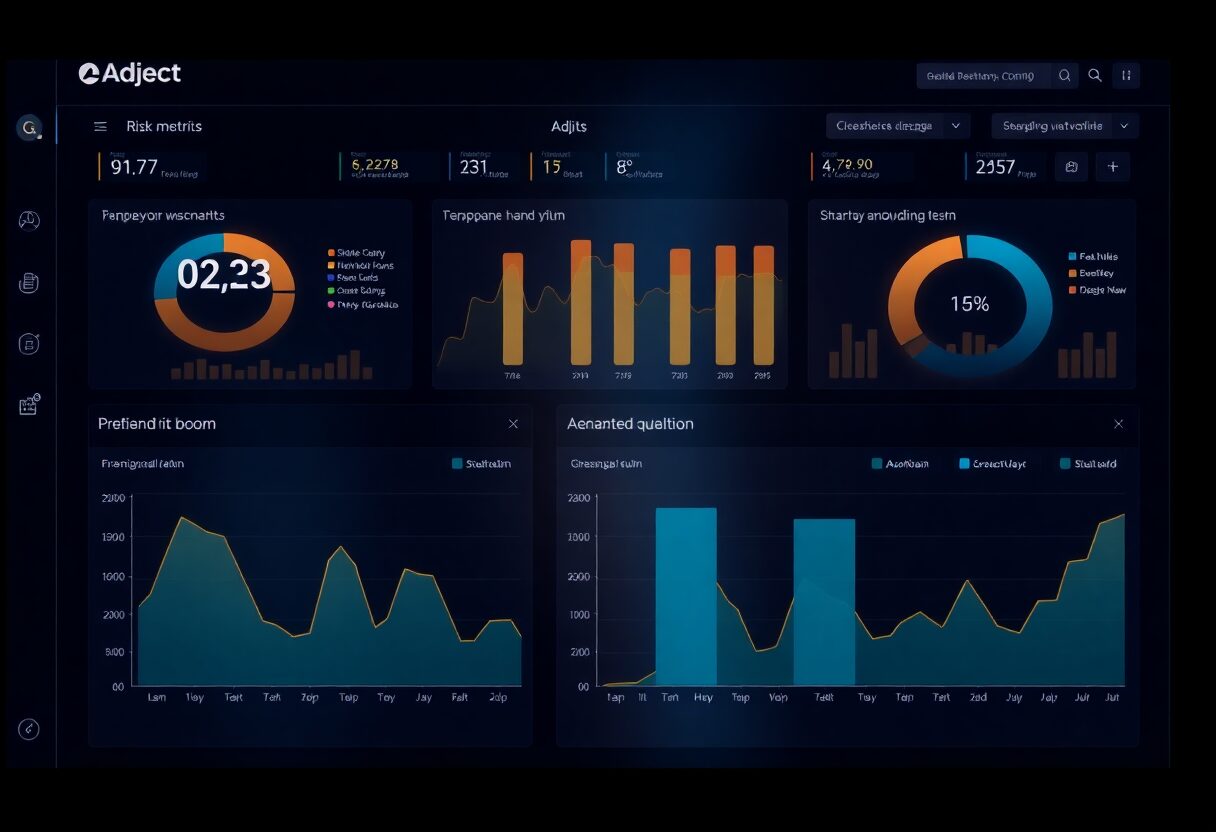
Figure: Strategic Automation Architecture for Adject
Accountability Matrix (Decision Guide)
This matrix provides a comparative analysis based on criteria critical for enterprise adoption. Competitors are selected based on their market position and architectural approach. Pricing is estimated based on public information for comparable services.
| Feature | Adject | OpenAI API (DALL-E 3) | Adobe Firefly API | Claid.ai |
|---|---|---|---|---|
| Target Use Case | E-commerce project workflows | General-purpose image generation | Enterprise creative workflows (commercially safe) | Automated e-commerce image enhancement |
| API Access | None Publicly Available | Yes (RESTful, High Throughput) | Yes (Integrated with Creative Cloud) | Yes (RESTful, E-commerce focused) |
| Ease of Use (Non-Technical) | Very High | Low (Requires code/automation platform) | Medium (Requires integration) | Medium (Requires integration) |
| Pricing Model | Subscription-based (project/seat limits) | Pay-per-API-call (consumption-based) | Consumption-based (Generative Credits) | Subscription + Pay-per-API-call |
| Vendor Lock-in Risk | High | Low | Medium (Tied to Adobe ecosystem) | Low |
Operational Resilience with Make.com
While Adject currently lacks an API, any future-state integration, or the integration of a competitor, must be architected for resilience. An automation platform like Make.com is suitable for this, but a naive implementation will lead to catastrophic data loss and financial leakage. The following principles are non-negotiable for a zero-failure system.
The core of the integration is a precisely configured API call. The endpoint must receive a `POST` request with a structured JSON payload. This payload must contain security headers (`Authorization: Bearer {{API_KEY}}`) and content type definitions (`Content-Type: application/json`). The most critical aspect is architecting for asynchronous, long-running tasks. Generative AI is not instantaneous. A robust workflow must use a callback URL, directing the API to send the final result to a separate webhook listener. This decouples the initial request from the result, conserving operational resources and creating an efficient, event-driven system.
To prevent duplicate operations and billing from network failures, every request must include an `idempotency_key`. This unique client-generated identifier ensures that if a request is sent multiple times due to an error, the server will only process it once and return the original result. This is the single most important field for building a financially accountable system.
Finally, error handling must be absolute. For critical failures like a `5xx` server error from the API provider, the automation workflow must use a “Break” directive. This immediately halts the process, preserves the input data, and flags the execution for manual review. Using an “Ignore” directive is unacceptable; it conceals the failure and allows the system to proceed in an inconsistent state, leading to silent data corruption where your PIM or DAM believes an asset was generated when it was not. A fail-stop approach is the only way to maintain an auditable and reliable data pipeline. For a complete technical blueprint, refer to the implementation guides at GetAutomationFlow.com.
ToolALT Risk Score
This scoring model evaluates Adject on a 1-10 scale, where 1 represents minimal risk and 10 represents maximum risk.
- Implementation Risk: 7/10 – The lack of an API means implementation is purely manual. While the UI is simple, the inability to automate creates a high risk of creating an inefficient, unscalable operational silo. The risk score for Adject is high due to its walled-garden nature.
- Cost Volatility: 3/10 – Assuming a standard SaaS subscription model, costs are predictable. The risk is low compared to consumption-based models which can scale unexpectedly. The primary financial risk with Adject is not volatility, but the opportunity cost of not having a more scalable, automated solution.
- Data Portability: 8/10 – Extremely high risk. Assets are generated and stored within the Adject ecosystem. There is no clear, automated path for bulk export or migration. A significant manual effort would be required to move to a different platform, creating a powerful incentive against switching, which defines high vendor lock-in.
This analysis evaluates Adject as a technical entity. It does not account for your specific migration debt or team-specific latency. Most SaaS failures stem from unaccounted switching costs.
**Calculate your switching risk** (Link to: https://toolalt.com/calculator)
Conclusion and Strategic Recommendation
The final verdict remains BUY, but with significant caveats. Adject should be adopted as a strategic tool to immediately reduce content creation latency and cost for specific, high-velocity marketing channels. It is a powerful stopgap solution. However, its monolithic, closed architecture represents a significant long-term risk. The organization must simultaneously plan for a future where a more scalable, API-first solution will be necessary. Adopting Adject is a short-term tactical win, but the long-term strategy must involve lobbying for API access or preparing to migrate to an API-driven competitor to avoid building critical business processes on an unscalable foundation.
Transparency Disclosure: This guide contains affiliate links. If you register or purchase through these links, ToolALT may earn a commission at no additional cost to you. This helps us continue to provide high-quality, technical automation research.
🛠 Technical Implementation Blueprint
If your board approves the transition to this tool, the next step is a zero-failure deployment.
Access the full Make.com automation guide for Adject at
GetAutomationFlow.com.