

This rating reflects the technical complexity of the API mapping and logic required for this specific automation. It is designed to help you match this guide with your current skills.
Meme? Yes Architecture Audit: A Dead-End for Enterprise Automation
This report provides a decisive technical audit of Meme? Yes, a Chrome extension designed for rapid meme retrieval. The analysis is framed through the lens of enterprise-level scalability, risk mitigation, and architectural resilience. It serves as a board-level record to preempt investment in non-scalable, consumer-grade tooling and to architect a robust, API-driven alternative. The primary objective is to prevent costly migration failures by making a cold, engineering-driven judgment on the tool’s viability in a managed IT ecosystem.
Audit Verdict: SKIP
The final verdict on Meme? Yes is an unequivocal SKIP. This tool is a classic example of a consumer-grade utility masquerading as a productivity enhancer. While it successfully solves a trivial workflow inefficiency—the manual, multi-step process of finding and pasting a meme into a chat client—its architecture is fundamentally incompatible with any serious business process or automated system. Meme? Yes is a thin-client wrapper, packaged as a browser extension, designed exclusively for manual human interaction. Its value is entirely locked within its user interface, offering no programmatic access, no API endpoints, and no webhooks for integration.
Investing resources into a tool that cannot be orchestrated as a component in a larger system offers zero meaningful return on investment for an enterprise. The functionality, while marginally useful for casual communication, is a black hole for automation. It cannot be triggered by system events, queried by other applications, or integrated into centralized content pipelines. Adopting Meme? Yes for any workflow would mean endorsing a manual, non-auditable process that actively encourages the proliferation of Shadow IT. The core requirement—generating contextually relevant images for communication—is better served by integrating a true meme generation API service directly into communication platforms. This provides superior control, scalability, and accountability, aligning with a mature architectural strategy rather than a tactical, dead-end shortcut.
Meme? Yes Technical Architecture & Vendor Lock-in Risk
The architecture of Meme? Yes is a textbook example of a Monolithic Walled Garden. A walled garden, in a technical context, refers to a closed ecosystem that restricts the flow of information and services to and from external sources. The tool operates entirely within the Chrome extension sandbox, a self-contained environment with no headless, API-first design principles. The system is engineered for direct user manipulation, not for machine-to-machine communication. This closed architecture makes Meme? Yes an endpoint, not a service, rendering it a dead-end for any automation initiative.
The vendor lock-in risk here is not traditional; it’s a lock-in to an inefficient, manual process. By failing to address the underlying need with a proper architectural solution, teams are locked into a low-throughput, high-latency communication antipattern. The risk is the cumulative operational debt that accrues from not building a scalable solution. Furthermore, the adoption of such a tool introduces significant Shadow IT debt. Shadow IT refers to the use of systems, devices, or software without explicit IT department approval, which introduces massive security and compliance risks. Because Meme? Yes is not a managed service, its use bypasses all centralized content, security, and compliance systems. This leads to a lack of visibility, an expanded attack surface, and potential data governance violations, as unvetted tools may not meet organizational security standards.
Strategic Comparison: Meme? Yes vs. Market Leaders
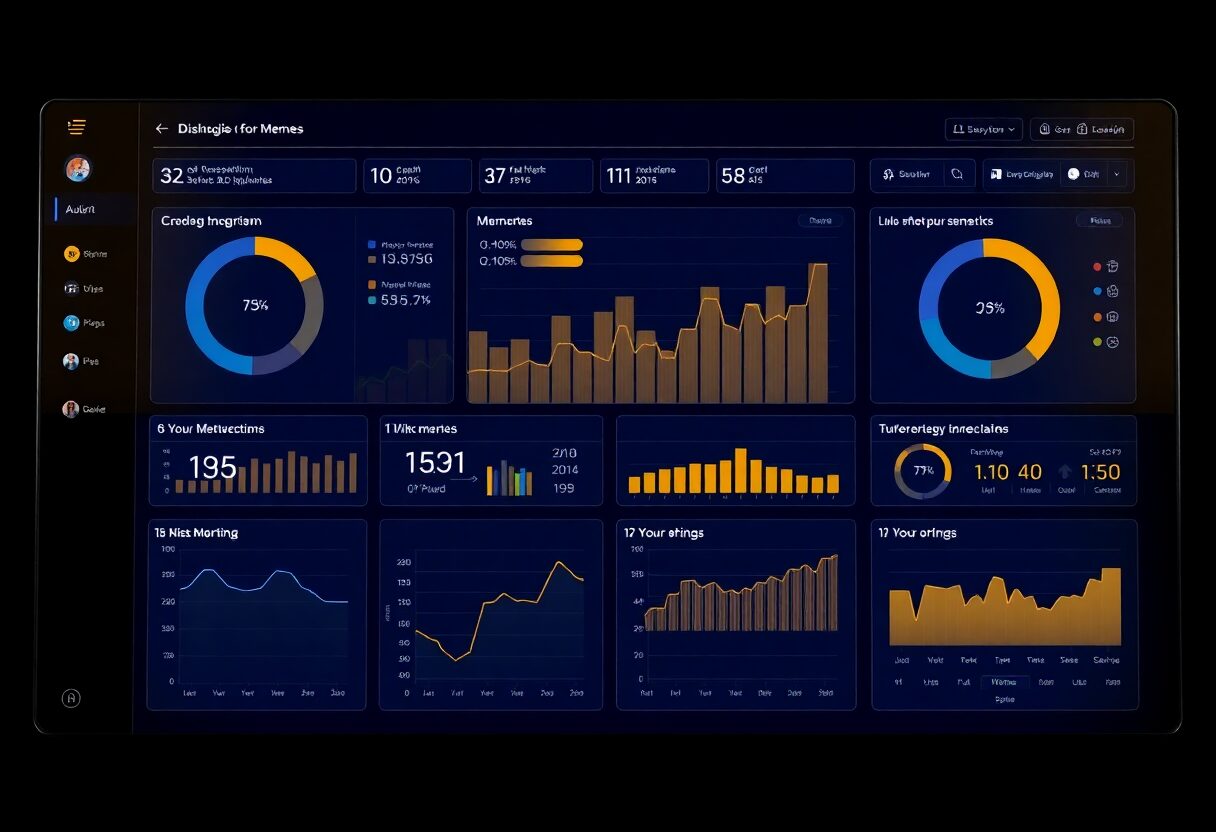
Figure: Strategic Automation Architecture for Meme? Yes
When compared to market-leading, API-first solutions for image and meme generation (e.g., Imgflip, Picsart, or other services offering a RESTful API), the deficiencies of Meme? Yes become starkly apparent. An API-driven service is designed for integration. It can be embedded into custom applications, Slack bots, marketing automation platforms, and content management systems. This allows for programmatic control, high-throughput generation, and consistent branding. Meme? Yes, by contrast, is a standalone utility that forces a manual, one-off workflow. It cannot be scaled, automated, or governed. The strategic choice is between a tool that marginally improves a broken manual process and a service that enables the creation of an entirely new, efficient, and automated process. For any organization focused on scalable operations, the choice is self-evident.
Accountability Matrix (Decision Guide)
| Feature / Attribute | Meme? Yes | API-First Alternative (e.g., Imgflip API) |
|---|---|---|
| Programmatic Access | None. UI-only interaction. | Full access via RESTful API endpoints (e.g., POST, GET). |
| Scalability | Zero. Limited to manual human speed. | High. Can handle thousands of requests per minute, limited only by API rate limits. |
| Integration Ecosystem | None. Operates in a silo within the Chrome browser. | Extensive. Integrates with any system capable of making HTTP requests (Make.com, Zapier, custom code). |
| Error Handling & Resilience | Not applicable. User is the error handler. | Programmatic error handling (e.g., HTTP status codes) allows for robust retry logic and failure alerts. |
| Data Portability | None. Favorites and history are locked within local browser storage. | High. All data (templates, generated content) is managed via API calls and can be stored in any system. |
| Accountability & Auditing | None. No logs or traceability of content generation. | High. API requests can be logged with correlation IDs for full traceability. |
| Sunk Cost Risk | Low initial cost, but high opportunity cost and risk of creating Shadow IT debt. | Higher initial implementation cost, but enables long-term efficiency and scalability. |
Operational Resilience with Make.com
To mitigate the risks associated with manual tools like Meme? Yes, a resilient, API-driven architecture is required. The following blueprint, using Make.com, details a zero-failure approach to building an automated meme generation service that prioritizes accountability and data integrity.
The core of this architecture is the precise configuration of API requests and, critically, a robust error-handling strategy. The entry point is a Custom Webhook, which decouples the trigger from the logic. The primary action is an “HTTP > Make a Request” module configured to communicate with a meme generation API.
A non-negotiable element in the request body is the inclusion of an idempotency key. This is a unique, client-generated UUID that allows the server to recognize and de-duplicate requests. If a network error causes a retry, the server sees the same key and returns the original successful response without processing the request twice, preventing duplicate generations. This is distinct from a correlation ID, which is used for traceability and logging, allowing an engineer to track a single logical operation across multiple distributed systems.
For data handling, zero-failure mapping is essential. Using Make.com’s `ifempty()` and `get()` functions prevents scenarios from halting due to missing or null data in the incoming payload. This ensures the workflow proceeds predictably, even with incomplete data.
However, the most critical component for operational resilience is the error handler. The “Ignore” directive is unacceptable for any critical workflow, as it leads to silent failures. The architecturally sound choice is the “Break” error handler. When a module encounters a critical error (e.g., a 500 Internal Server Error from the API), the “Break” directive immediately halts the scenario’s execution. Before stopping, it executes a dedicated error route, which should be configured to persist the entire failed input payload to a durable data store (like Google Sheets or a dedicated database). This creates a reliable queue of failed jobs. Once the external API issue is resolved, these jobs can be re-processed from the data store, ensuring zero data loss. This approach provides full accountability and system integrity, a capability entirely absent in a manual tool like Meme? Yes.
ToolALT Risk Score
- Implementation Risk: 8/10 – The risk is not in implementing Meme? Yes for its intended trivial purpose, but in its potential misuse as a solution for a real business need. This encourages the growth of unmanageable Shadow IT, creating significant security and compliance vulnerabilities.
- Cost Volatility: 2/10 – The tool itself is likely free. The true cost is the massive, unquantifiable operational latency debt incurred by not implementing a proper, scalable, API-driven solution from the outset.
- Data Portability: 10/10 – The risk is maximum. There is no data portability. All user data, such as saved favorites, is trapped within the local browser storage of the extension. There is no mechanism for export or migration, creating a complete data silo.
This analysis evaluates Meme? Yes as a technical entity. It does not account for your specific migration debt or team-specific latency. Most SaaS failures stem from unaccounted switching costs.
Calculate your switching risk
In conclusion, Meme? Yes is a well-executed consumer utility that solves a minor annoyance. However, from a systems architecture and risk mitigation perspective, it is a liability. It offers no path to automation, introduces Shadow IT risks, and fails every test of enterprise-grade scalability and accountability. The decisive recommendation is to SKIP Meme? Yes and invest in building a resilient, API-first integration that addresses the core business need in a scalable and auditable manner.
Transparency Disclosure: This guide contains affiliate links. If you register or purchase through these links, ToolALT may earn a commission at no additional cost to you. This helps us continue to provide high-quality, technical automation research.
🛠 Technical Implementation Blueprint
If your board approves the transition to this tool, the next step is a zero-failure deployment.
Access the full Make.com automation guide for Meme? Yes at
GetAutomationFlow.com.