

🎯 AI Technical Difficulty: Technical Complexity: Advanced
This rating reflects the technical complexity of the API mapping and logic required for this specific automation. It is designed to help you match this guide with your current skills.
The Verdict: A Mandatory Architectural Shift
The SEORCE platform directly confronts the most significant architectural failure in modern digital marketing: the fragmented, high-latency data retrieval process for visibility analysis. For years, systems architects have been forced to stitch together a fragile patchwork of disparate API calls—pulling keyword ranks from one service, technical audits from another, backlink data from a third, and now, manually interrogating LLMs like ChatGPT and Gemini for brand citations. This isn’t just inefficient; it’s a strategic dead end. It creates thousands of hours of operational drag as teams manually correlate data, delaying the identification of critical growth opportunities and competitive threats. The core problem is a lack of a unified intelligence layer capable of real-time, cross-channel analysis. This makes any proactive strategy nearly impossible to execute at scale.
THE VERDICT: BUY. Let’s be unequivocally clear: this platform is not another superfluous SEO tool. It represents a fundamental re-architecting of the data stack for the new era of ‘Agent-first’ search. While its consolidation of traditional SEO functions (crawling, rank tracking) is a welcome efficiency gain, the core, non-negotiable value lies in its “AI Beacon” feature. This system, which actively tracks brand visibility, sentiment, and narrative within AI agent responses from major platforms like ChatGPT, Gemini, and Claude, solves a complex and critical engineering challenge. Ignoring this emergent channel is a catastrophic failure in strategic foresight. SEORCE provides the only viable path to move from simply tracking blue links to measuring and controlling your brand’s presence inside synthesized AI answers. The ROI is immediate, measured in recovered engineering hours and the mitigation of strategic risk from a massive market blind spot. Investing in this architecture is an investment in future-proofing your entire digital visibility stack.
What is SEORCE? Architecture & Pricing
At its core, the system is architected as a “Headless API-first” solution, a design choice that speaks directly to enterprise-level needs for automation and integration. The polished frontend dashboard is merely a client of its own robust, scalable API infrastructure. This is not a closed, monolithic ecosystem. The platform is explicitly built to ingest massive datasets from multiple sources—Google Search Console, third-party analytics, and its proprietary LLM monitoring network—process this data within a unified intelligence layer, and then expose it via comprehensive API endpoints. This architecture is a clear signal that it is designed for serious enterprise workflows, custom BI tool integrations, and even white-label solutions for technology partners.
The target audience for SEORCE is the technically-astute marketing department or agency that has outgrown the limitations of traditional, GUI-only tools. They understand that true scalability comes from programmatic access to data. While it offers a user-friendly interface, its real power is unlocked through its API.
Potential Hidden Costs
While official pricing isn’t public, we can extrapolate based on similar API-first SaaS models. Expect a tiered pricing structure likely based on a combination of user seats, tracked keywords, and, most critically, API call volume. The primary hidden cost will almost certainly be API consumption credits. The “AI Beacon” feature, by its nature, will be data-intensive. Enterprises looking to build real-time dashboards or frequent alert systems will need to budget for significant API usage beyond the base subscription fee. Another potential cost is data retention; extended historical data access may come at a premium. Before committing, a thorough analysis of your projected API call frequency is mandatory to forecast the true total cost of ownership. This is the new standard for SEO platforms, and SEORCE is leading the charge.
Strategic Comparison vs. The Market
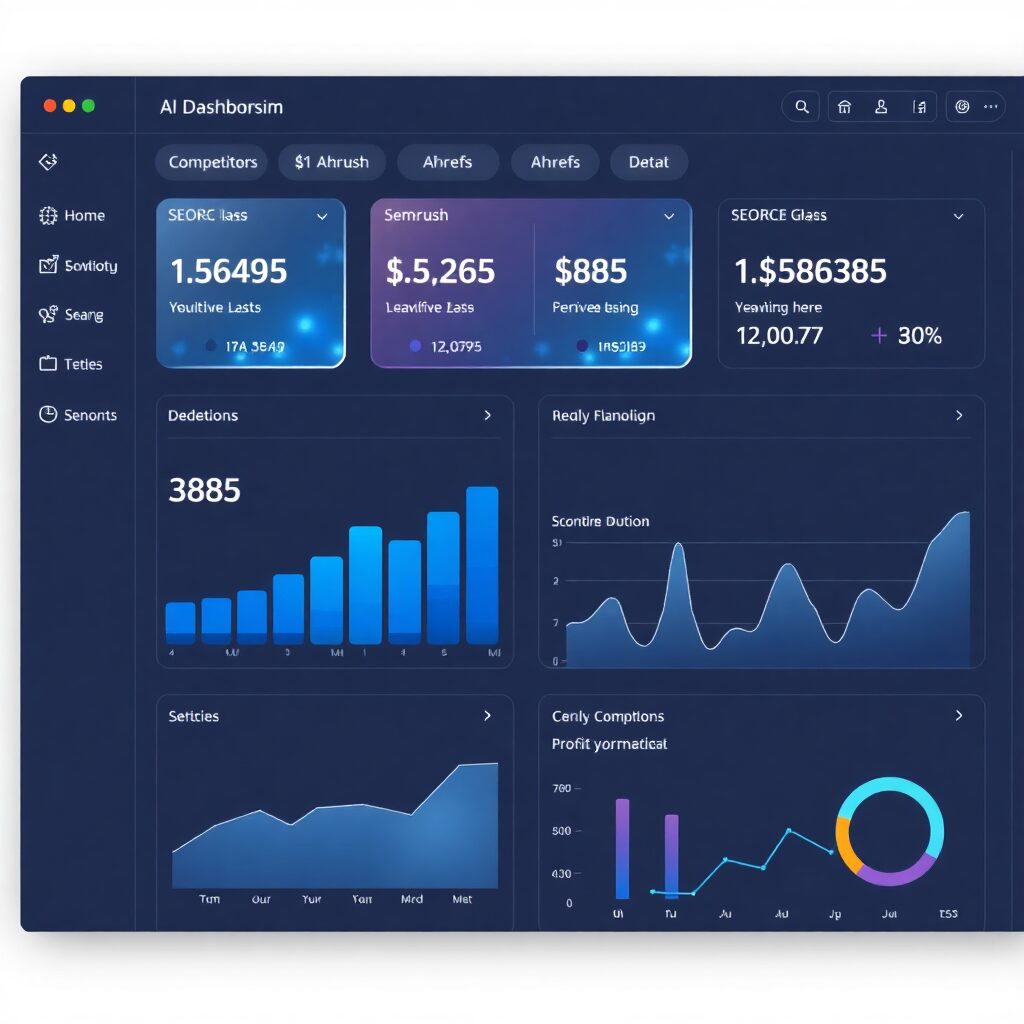
Figure: Strategic Automation Architecture for the Platform
To understand the strategic value of SEORCE, it’s essential to compare it not just as a tool, but as an architectural choice against the established market leaders: Semrush, Ahrefs, and Moz. These platforms are titans of the traditional SEO world, offering deep, feature-rich environments for keyword research, backlink analysis, and site auditing. They have been the default choice for a decade. However, the market is undergoing a seismic shift. The rise of generative AI as a primary user interface for information retrieval has created a new, critical data layer that these legacy platforms are only now beginning to address. While Semrush and others are adding AI visibility features, SEORCE was built from the ground up with this as a core, not ancillary, function. This architectural focus gives it a distinct advantage in data fidelity and analytical depth concerning AI-driven search. The decision is no longer about which tool has the biggest backlink index, but which platform provides a unified view of both traditional and generative search visibility. In this new landscape, this solution presents a compelling, forward-looking architecture.
The Comparison Matrix (Decision Guide)
| Metric | SEORCE | Semrush | Ahrefs | Moz |
|---|---|---|---|---|
| Core Features | Unified platform with traditional SEO metrics PLUS market-leading AI Agent visibility tracking (“AI Beacon”). Designed for the new search paradigm. | Comprehensive all-in-one suite for SEO, PPC, and content marketing. Recently added AI visibility features. | Best-in-class for backlink analysis and competitor research. Strong keyword research tools. Lacks focus on paid search. | Strong on-page SEO and local search tools. Beginner-friendly interface but smaller backlink database. |
| Pricing Model | Expected Enterprise Tiered SaaS (Users/Keywords) with a heavy emphasis on usage-based API credits for its core data services. | Tiered subscription model. Can become expensive with multiple users and projects. Starts around $130/mo. | Tiered subscription model. Pricing is comparable to Semrush, starting around $129/mo. | More affordable entry-level plans, making it accessible for small businesses. Starts around $99/mo. |
| API Scalability | API-first architecture. Built for high-volume, programmatic access and integration with BI tools. The entire platform is its own API client. | Robust API available on higher-tier plans, but the architecture is not inherently “headless” in the same way. | Offers a comprehensive API for developers, but like Semrush, it’s an extension of the platform, not its foundational layer. | Mozscape API is powerful but can be more limited in scope compared to Semrush and Ahrefs. |
| Automation Support (Make.com) | Excellent. Native webhooks and a clean API structure make it ideal for deep integration with Make.com for real-time alerting and data processing. A perfect match. | Good. Has a Make.com app with many modules, but complex workflows may require direct API calls. | Good. Also has a Make.com app, but automation is focused on traditional SEO tasks, not the AI visibility offered here. | Fair. Less native support in Make.com, often requiring manual HTTP requests for automation. |
| Verdict | BUY. The essential platform for any organization serious about future-proofing its visibility strategy. Clearly the winner for the next generation of search. | BUY. A powerful, mature all-in-one platform that remains a market leader. A safe, but potentially less forward-looking, choice. | BUY. Unbeatable for deep backlink intelligence. A critical tool for specialists, but not the unified solution we are reviewing. | SKIP. A solid tool for beginners and small businesses, but lacks the enterprise-grade data and API architecture required for scalable, modern visibility analysis. Not a true competitor. |
Technical Implementation with Make.com
The API-first architecture makes this tool exceptionally well-suited for automation via platforms like Make.com. The true power is unlocked when you move beyond the dashboard and into real-time, event-driven workflows. A primary use case is creating an instant alert system when your brand is mentioned by an AI agent.
H1: Setting Up a Webhook in Make.com
The process begins with a Webhook module in Make.com, which provides a unique URL. Inside your platform settings (under ‘Integrations’ or ‘Alerts’), you would add this URL to a new “AI Beacon Alert.” This tells the system to send a data packet (a JSON payload) to your Make.com scenario the instant a new mention is detected.
1. In Make.com, create a new scenario and select the ‘Webhooks’ > ‘Custom webhook’ module as the trigger.
2. Click ‘Add’, name your webhook, and copy the generated URL to your clipboard.
3. In your account settings, navigate to the API/Alerts section and create a new webhook-based alert, pasting the URL from Make.com.
4. Run the Make.com scenario once to put it in a listening state. Then, trigger a test event from the dashboard. Make.com will capture the data structure.
H2: Mapping the JSON Payload
Once the test webhook is received, Make.com understands the data structure of the incoming payload. Let’s assume the system sends a JSON object like this:
{
  "mention_id": "mid_1a2b3c",
  "brand_name": "OurCompany",
  "source_llm": "Google Gemini",
  "query": "best enterprise crm solution",
  "mention_text": "...for enterprise needs, many recommend OurCompany for its robust features...",
  "sentiment_score": 0.85,
  "timestamp": "2026-01-12T11:23:00Z"
}
You can now map these fields to other modules. For example, in a Slack module, you could format a message: “New AI Mention detected! `source_llm` mentioned `brand_name` for query `query`. Sentiment: `sentiment_score`.” This provides instant, actionable intelligence to your marketing team. You can easily map the incoming data to any other module in your workflow.
H3: Critical Error Handling
When dealing with APIs, you must plan for failure. Network issues or temporary server unavailability can result in 400/500-level errors, breaking your scenario. Make.com provides robust error handling directives.
For a non-critical alerting workflow (like the Slack example), you can add an ‘Ignore’ directive. Right-click the module and select ‘Add error handler’. Choose the ‘Ignore’ directive. This tells Make.com to simply ignore the error for that specific execution and continue. The scenario won’t stop, but you will lose that single data packet.
For critical workflows, such as logging every mention to a database, use a ‘Resume’ directive. This requires a more complex setup where you store the incoming payload, wait for a period (e.g., 5 minutes), and then retry the operation. This ensures data integrity even if downstream services are temporarily unavailable. Handling JSON errors properly is key to robust automation.
Top 3 Alternatives
While SEORCE is our top recommendation for its forward-thinking architecture, specific use cases might warrant considering the established leaders.
- Semrush: The best choice for organizations that need an all-in-one digital marketing suite covering SEO, PPC, and social media analytics in one platform. If your primary need is deep competitive intelligence on paid advertising alongside SEO, Semrush is an incredibly powerful, albeit less specialized, alternative.
- Ahrefs: The undisputed leader in backlink analysis. If your organization’s SEO strategy is overwhelmingly focused on link building and off-page authority, Ahrefs’ massive link index and specialized toolset are invaluable. It is a specialist tool, whereas our recommendation is a unified visibility platform.
- SE Ranking: A strong, budget-friendly contender for small to medium-sized businesses and agencies. It offers a comprehensive feature set, including good rank tracking and site auditing capabilities, at a more accessible price point. It lacks the enterprise-grade API and the critical AI visibility tracking that defines our top pick.
Ultimately, the choice depends on your strategic priority. If that priority is preparing for the next decade of search, SEORCE is the only logical option. The value proposition is its unique focus on this new frontier. No other tool, including these strong alternatives, is as dedicated to the AI channel.
Conclusion & Advanced Resources
In conclusion, the decision is straightforward. This platform is not just another tool to add to a bloated marketing stack; it is a necessary consolidation and a strategic imperative. Its API-first architecture and unique focus on AI agent visibility address the single largest blind spot in digital marketing today. Failing to monitor how your brand is portrayed in AI-generated answers is a critical error that cedes ground to competitors. The cumulative debt incurred by manually correlating fragmented data is immense. SEORCE eliminates this debt by design.
Final Verdict: BUY. The platform is an essential investment for any organization that intends to remain competitive in the evolving landscape of digital discovery.
To begin automating the powerful data from this system, start by building your workflows on a scalable platform. Start with Make.com.
For complex webhook error handling templates specific to this architecture, such as building multi-step retry logic for database logging, check the engineer’s library at GetAutomationFlow.com.
Transparency Disclosure: This guide contains affiliate links. If you register or purchase through these links, ToolALT may earn a commission at no additional cost to you. This helps us continue to provide high-quality, technical automation research.