
This rating reflects the technical complexity of the API mapping and logic required for this specific automation. It is designed to help you match this guide with your current skills.
Architecture Audit: Why Session Pilot Fails at Scale
AUDIT VERDICT: WAIT. Our analysis of Session Pilot reveals a tool engineered for a single, critical purpose: high-privacy, offline, on-device speech-to-text transcription. It executes this function with precision, serving a niche but vital market segment—such as legal, clinical research, or journalism—where data confidentiality is paramount and internet connectivity cannot be guaranteed. The core value proposition is the complete absence of cloud processing; all audio data remains on the user’s local machine, eliminating the network I/O latency and security vulnerabilities inherent in API-based transcription services. For a professional handling sensitive information, this is a significant operational advantage.
However, from the perspective of an integrated, scalable automation architecture, Session Pilot is a strategic non-starter. Its defining feature—being a fully offline, monolithic desktop application—is its greatest limitation in a connected ecosystem. The tool is, by design, a walled garden. It offers no API, no webhooks, and no programmatic method for data ingestion or extraction. This makes it an architectural dead-end for any platform, like GetAutomationFlow.com, that relies on inter-service communication to create value. The decision to forgo an API is not an oversight; it is a fundamental design choice to enforce its privacy promise. While it solves the latency and security problem for an individual end-user, it offers zero throughput for an automated system. For our purposes, adopting this tool would be a strategic regression, introducing a manual data-transfer bottleneck that automation is meant to eliminate. The verdict is not a condemnation of the tool’s quality, but a clear judgment of its incompatibility with our architectural requirements. It is a tool for a person, not a service for a system.
Session Pilot Technical Architecture & Vendor Lock-in Risk
The architecture of Session Pilot can be classified as a “Monolithic Silo.” The entire system—from audio input to processing and text output—is encapsulated within a native desktop application. This self-contained design is intentional, ensuring that no data ever leaves the local device, which is the cornerstone of its security model. While this is a feature for its target audience, it represents a significant risk for any organization considering it as part of a broader workflow. The data generated within Session Pilot is effectively trapped. Without an API, the only way to move the transcribed text into another system is through manual copy-and-paste or file export/import operations. This introduces a high potential for human error, creates an unscalable workflow, and destroys any possibility of real-time data processing.
This deliberate lack of connectivity creates a severe vendor lock-in risk. Any significant volume of transcribed data created and stored within the application’s local database or file structure becomes an isolated asset. Migrating this data to a different platform in the future would require a manual, labor-intensive effort, incurring substantial operational latency debt. Furthermore, the absence of an API means Session Pilot cannot be integrated into any automated backup, disaster recovery, or centralized logging strategy. It operates as an island, invisible to the monitoring and management tools that govern a modern, resilient tech stack. For any business that values data portability and operational agility, this architectural model is fundamentally untenable. The very design that makes Session Pilot a trusted tool for privacy-conscious individuals makes it a high-risk liability for a scalable, automated enterprise.
Strategic Comparison: Session Pilot vs. Market Leaders
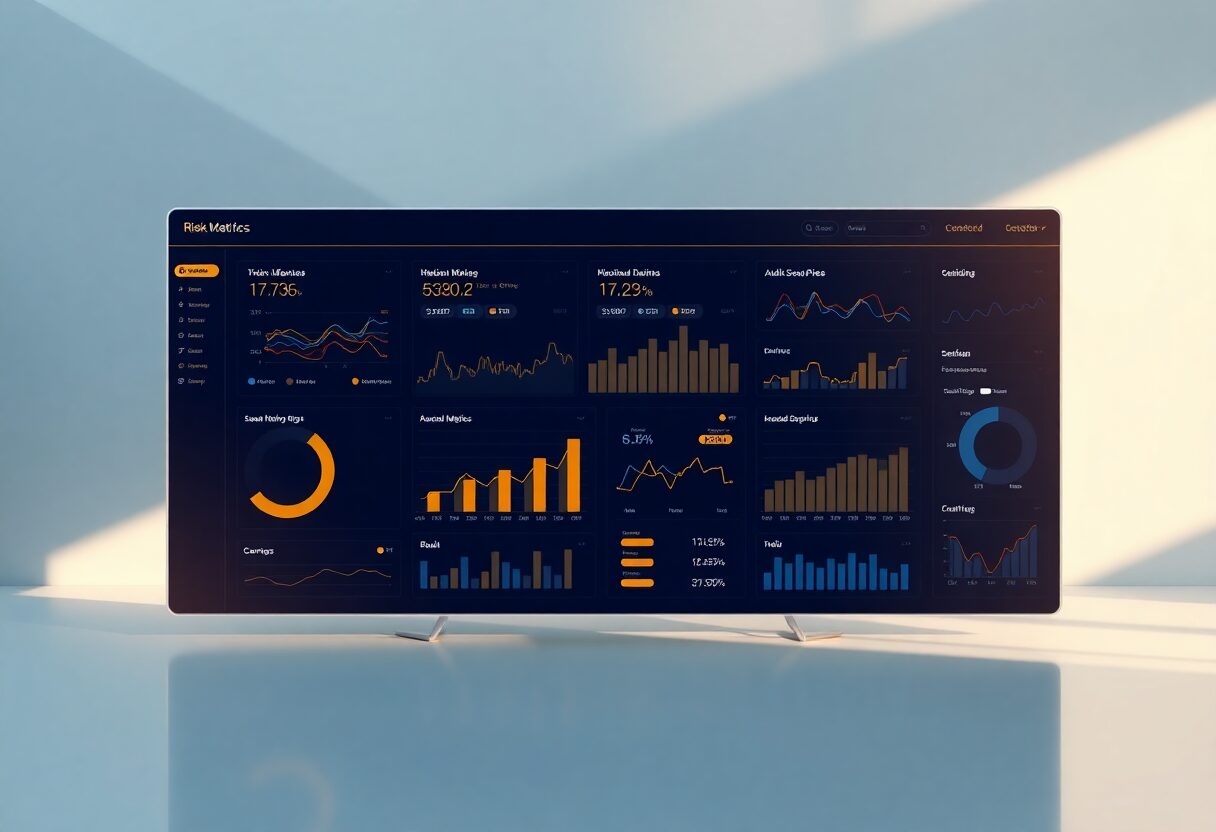
Figure: Strategic Automation Architecture for Session Pilot
When compared to market-leading transcription services, the strategic divergence of Session Pilot becomes starkly apparent. Cloud-based giants like AssemblyAI, Google Speech-to-Text, and Otter.ai are architected as API-first platforms. Their core business is not selling a standalone application, but providing programmatic access to powerful, scalable AI models for transcription and audio intelligence. These services are designed for integration, offering RESTful APIs, real-time streaming capabilities, and extensive developer documentation. They fit seamlessly into automated workflows, allowing systems like Make.com to trigger transcription jobs, receive data via webhooks, and route the output to other applications without human intervention.
The fundamental trade-off is privacy versus scalability. Session Pilot prioritizes absolute data privacy by sacrificing all connectivity. In contrast, API-driven services prioritize scalability and integration, addressing privacy through contractual obligations (like HIPAA BAAs), data encryption, and regional data residency options. For a developer building an application that needs to transcribe thousands of audio files per day, AssemblyAI or Google Cloud are the logical choice; their infrastructure is built for high throughput. For a therapist transcribing a confidential patient session, the guarantee that the audio never leaves their computer makes Session Pilot the superior option. The choice is not about which tool is “better” in a vacuum, but which architectural philosophy aligns with the specific use case’s security and scalability requirements.
Accountability Matrix (Decision Guide)
This matrix provides a clear, decisive comparison between Session Pilot and its API-driven competitors. It is designed to hold the decision-making process accountable to architectural realities, not just feature lists.
| Feature / Attribute | Session Pilot | AssemblyAI (API-First) | Otter.ai (SaaS with API) |
|---|---|---|---|
| Core Function | Offline, on-device speech-to-text transcription. | Scalable Speech-to-Text and Audio Intelligence via API. | AI meeting assistant with real-time transcription and collaboration. |
| API Access | None. Architecturally designed to be isolated. | Core Product. Comprehensive REST API for batch and real-time streaming. | Available for business/enterprise plans for integration. |
| Data Location | Exclusively on the user’s local machine. | Cloud-based, with options for on-premise/VPC deployments for enterprise. | Cloud-based. |
| Scalability | Limited by the user’s local hardware performance. Unsuitable for bulk processing. | Extremely high. Built for massive, concurrent workloads. | High. Managed SaaS infrastructure designed for team collaboration. |
| Pricing Model | Currently listed as free, suggesting a potential future one-time fee or subscription model. | Pay-as-you-go based on audio duration, with enterprise tiers. | Per-user, per-month subscription model with a free tier. |
| Integration Ecosystem | None. A closed, monolithic system. | Extensive. Designed to be a component in a larger tech stack. | Good. Integrates with calendars, video conferencing, and CRMs. |
| Primary Use Case | Highly confidential, individual transcription tasks where privacy is non-negotiable (e.g., legal, medical). | Developers building applications requiring programmatic speech recognition at scale. | Teams needing to capture, summarize, and collaborate on meeting notes. |
Operational Resilience with Make.com
To underscore the architectural gap that Session Pilot represents, it is instructive to blueprint how a properly architected, API-driven transcription service integrates into a resilient automation workflow using a platform like Make.com. This blueprint serves as a standard against which tools must be measured. An integrable service must, at a minimum, support programmatic interaction via a RESTful API.
The process begins with a trigger, typically a “Custom Webhook” module in Make.com, which provides a unique URL to receive data from other systems. When a new audio file is ready for transcription, a source system sends a payload to this webhook. This instantly initiates the scenario, which then proceeds to an “HTTP Make a Request” module configured to communicate with the transcription service’s API.
This HTTP request must be meticulously structured. The method would be `POST` to create a new transcription job. The headers are critical for security and data integrity: an `Authorization` header containing a `Bearer` token and a `Content-Type` header set to `application/json` are non-negotiable. The request body, formatted as JSON, would contain the URL of the audio file and configuration parameters. The most vital field in this payload is an `idempotency_key`, a unique identifier generated by Make.com. This key prevents the creation of duplicate jobs if a network error triggers an automatic retry, ensuring the operation is executed exactly once—a cornerstone of data integrity.
Furthermore, robust workflows must account for API failures. For any transient server-side error (a 5xx status code), the error handling directive must be set to “Break.” This directive halts the scenario and saves the state, preserving the input data that caused the failure. This allows an administrator to manually resume the execution once the API is stable, preventing data loss. The alternative, “Ignore,” is architecturally unacceptable as it discards the data and silently terminates the path, leading to data corruption. This entire framework of webhooks, authenticated API calls, idempotent requests, and stateful error handling is impossible to implement with Session Pilot due to its offline, non-API design.
ToolALT Risk Score
Our risk assessment quantifies the potential for operational failure and financial exposure when considering Session Pilot for an integrated, automated environment.
- Implementation Risk: 10/10For its intended use as a standalone tool, the risk is low. However, for our required use case—integration into an automated workflow—the risk is absolute. There is no API, making programmatic implementation impossible without unsupported, brittle screen-scraping or UI automation, which is a guaranteed path to failure. The score reflects the risk to our specific architectural strategy.
- Cost Volatility: 3/10The financial risk is low. The product is currently free, and similar offline tools often adopt a one-time purchase or stable annual subscription model. This contrasts favorably with the usage-based pricing of API services, which can be volatile and scale unpredictably with demand. The primary cost is not financial but operational: the crippling expense of manual labor required to bridge the gap left by its lack of connectivity.
- Data Portability: 9/10The risk of data entrapment is severe. By design, Session Pilot creates a data silo on the local machine. There are no built-in mechanisms for automated, bulk export of data in a structured format suitable for migration to another system. Extracting a large corpus of transcripts would be a time-consuming and costly manual project, representing a significant technical debt and a major obstacle to future platform agility.
This analysis evaluates Session Pilot as a technical entity. It does not account for your specific migration debt or team-specific latency. Most SaaS failures stem from unaccounted switching costs.
**Calculate your switching risk** (Link to: https://toolalt.com/calculator)
Conclusion: A Niche Tool, Not a System Component
In conclusion, Session Pilot is an effective and well-designed tool for its specific, narrowly defined purpose: secure, offline transcription for individual professionals. It successfully addresses the critical need for data privacy in sensitive environments. However, it is fundamentally incompatible with the requirements of a modern, scalable, and automated business architecture. Its greatest strength—its isolation—is an insurmountable weakness for system integration. For ToolALT.com and its clients at GetAutomationFlow.com, the verdict remains a firm WAIT. It is a utility to be recommended to specific end-users, not a component to be integrated into our core infrastructure.
Transparency Disclosure: This guide contains affiliate links. If you register or purchase through these links, ToolALT may earn a commission at no additional cost to you. This helps us continue to provide high-quality, technical automation research.
Technical Implementation Blueprint
If your board approves the transition to this tool, the next step is a zero-failure deployment.
Access the full Make.com automation guide for Session Pilot at
GetAutomationFlow.com.