
This rating reflects the technical complexity of the API mapping and logic required for this specific automation. It is designed to help you match this guide with your current skills.
The Verdict: A Promising Tool on an Unfinished Foundation
Our initial analysis of Sloggo reveals a tool that correctly identifies a massive industry pain point: the gross over-engineering of logging for small-to-medium scale applications.
The primary value proposition is its radical simplicity. It aims to deliver a near-zero configuration log viewer by leveraging a single Go binary and an embedded DuckDB database. This approach directly attacks the cumulative debt incurred by organizations that default to heavyweight, distributed systems like the ELK Stack or Splunk for projects that simply do not warrant such complexity.
The hidden ROI is compelling. We foresee a significant reduction in cloud hosting costs, CI/CD pipeline complexity, and, most importantly, the operational burden on engineering teams. For development, staging, or internal tools, this solution could reclaim hundreds of engineering hours per year otherwise lost to configuring complex observability stacks.
However, this promise is overshadowed by its current state. The official verdict is a firm WAIT.
The tool is explicitly designated as an alpha release and is not production-ready. It lacks the foundational pillars of any serious enterprise tool: high availability, redundancy, and any form of built-in security for its API or ingestion ports.
While the performance claims are impressive—capable of handling bursts up to 1 million logs per second—its single-node, monolithic architecture creates a hard ceiling on scalability. Using it in any production capacity today would be architecturally irresponsible. It is a brilliant proof-of-concept for internal debugging, but far from a dependable enterprise solution.
What is Sloggo? Architecture & Pricing Analysis
The platform is a lightweight, open-source syslog collector and viewer designed for extreme operational simplicity. Its architecture is a masterclass in minimalism, combining a syslog collector (supporting RFC 5424 and RFC 3164), a database, and a web UI into a single, self-contained Go binary.
This monolithic design is a deliberate trade-off. It sacrifices the extensibility of microservices for the profound benefit of low resource overhead and zero-dependency deployment.
At its core, the binary utilizes an embedded DuckDB database. This high-performance analytical engine is perfectly suited for the fast, columnar queries typical in log analysis. This choice allows the system to deliver impressive query performance on a local data file without the complexity of managing a separate database server.
The target audience is clear: developers, small DevOps teams, and startups who need immediate log visibility for non-critical systems. Think development environments, staging servers, IoT device log collection, or internal tools where the cost of a full ELK deployment is unjustifiable.
The Hidden Costs and Limitations
Currently, Sloggo is open-source, so there are no direct licensing costs. However, the hidden costs lie in its architectural limitations.
The lack of built-in security means any deployment requires a secure, private network or a meticulously configured reverse proxy. This adds an operational cost that counteracts some of its simplicity.
Furthermore, the single-node architecture means there is no high availability. If the node running the binary fails, all logging capabilities are lost, and recent data may be unrecoverable. This makes it entirely unsuitable for any system requiring high uptime.
Scalability is purely vertical. Performance is dictated by the CPU, RAM, and disk I/O of a single host. Organizations must understand that this is not a distributed system but a highly efficient, single-point appliance.
Strategic Comparison vs. The Market
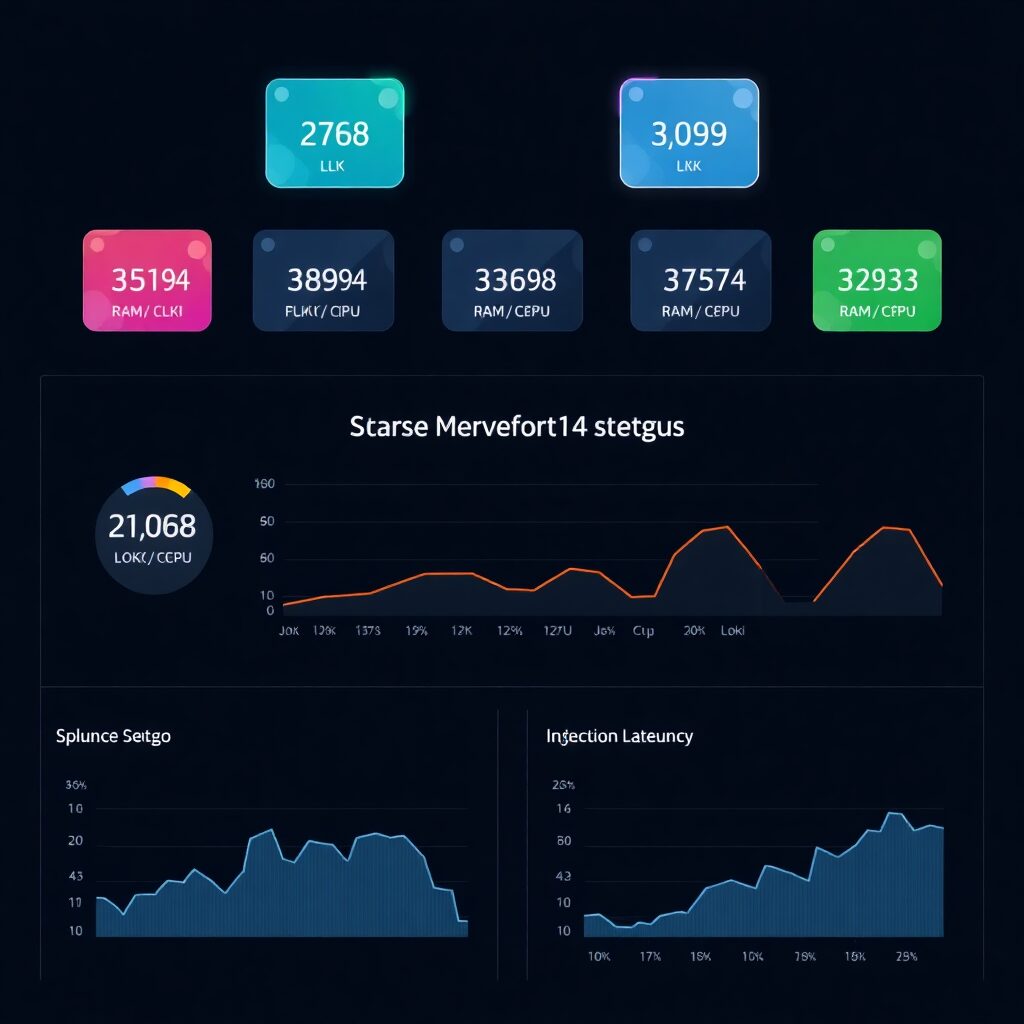
Figure: Strategic Automation Architecture for the Platform
When evaluating this tool, it’s essential to understand it’s not trying to be a feature-for-feature competitor to the market titans. Instead, it creates a niche at the extreme lightweight end of the spectrum.
Its primary competitors are the heavyweight, distributed logging platforms that have become the de facto standard in many organizations. The core value here is not what it has, but what it lacks: complexity, high resource consumption, and a steep learning curve.
The following analysis positions Sloggo against the established leaders—ELK Stack, Grafana Loki, and Splunk—to provide a clear architectural verdict.
The Comparison Matrix (Decision Guide)
| Feature | Sloggo | ELK Stack | Grafana Loki | Splunk |
|---|---|---|---|---|
| Architecture | Monolithic Go binary with embedded DuckDB. Single-node. | Distributed system based on Lucene. Requires separate components. | Horizontally-scalable system. Indexes metadata only. | Distributed, proprietary architecture. Powerful indexing. |
| Resource Footprint | Extremely low. Compressed size is under 10MB. | Very high. JVM-based and resource-intensive. | Low to moderate. Reduces storage costs significantly. | High. Requires substantial hardware resources. |
| Pricing Model | Open Source (Free). Costs are purely operational. | Open source core with paid features. Costs escalate with data. | Open Source (AGPLv3). Designed to be cost-effective. | Proprietary, license-based. Premium pricing. |
| Automation Support | Effectively none. Lacks endpoints for configuration or events. | Excellent. Comprehensive REST APIs for every component. | Very good. API-first design integrates with Grafana. | Excellent. Robust REST APIs for extensive automation. |
| Verdict | WAIT. Ideal for trusted, non-production environments only. | BUY (with caution). The standard for large-scale analysis. | BUY. The modern choice for cloud-native setups. | BUY (for enterprise). Market leader with premium features. |
Technical Implementation with Make.com
A core tenet of modern systems architecture is automation, and a tool’s value is often proportional to its API-first design. This is where the current alpha version of Sloggo falls short.
As of today, direct and meaningful automation via a platform like Make.com is impossible. The tool acts as a monolithic walled garden, exposing only a basic health-check endpoint.
It lacks the fundamental API endpoints required for any serious integration: there are no webhooks for event-driven workflows, no RESTful endpoints for programmatic querying, and no interface for remote configuration. This makes it an island, incapable of participating in a larger observability strategy.
Blueprint for a Future-State Automation
For this tool to become viable in an automated ecosystem, it needs to develop a proper RESTful API. Here is a blueprint of the minimum required endpoints for a Make.com scenario:
- `POST /api/v1/query`: This would be the most critical endpoint. In a Make.com scenario, you would use the “HTTP Request” module to send a JSON payload containing SQL queries against the DuckDB backend. The response would be mapped to other modules, such as Slack for notifications.
- `GET /api/v1/config`: Endpoints to read and update the configuration (e.g., retention period) dynamically based on system load.
- Webhook Integration: A truly automatable tool needs outgoing webhooks. Users could configure it to send a JSON payload to a Make.com webhook URL whenever a ‘fatal’ log entry is ingested, triggering real-time alerts.
Error Handling Strategy (Hypothetical)
If this API existed, robust error handling in Make.com would be crucial.
When calling the hypothetical query endpoint, you would configure specific directives. For a `429 Too Many Requests` error, implement a “Resume” directive with an exponential backoff delay to gracefully handle rate limiting.
For `500` series server errors, an “Ignore” directive might be appropriate if the query is non-critical. However, for `400 Bad Request` errors (e.g., an invalid SQL query), the scenario should halt immediately. Without these API fundamentals, automating Sloggo remains purely academic.
Top 3 Alternatives
While the current version is not production-ready, the problem it aims to solve is very real. For those needing a solution today, here are the top three alternatives.
- Grafana Loki: The best choice for teams heavily invested in the cloud-native ecosystem. Loki’s architecture, which indexes only metadata labels, makes it incredibly resource-efficient. It is the spiritual successor to the problem our subject wants to solve, but at a distributed, production-ready scale.
- ELK Stack: The undisputed leader for powerful, full-text search. Despite its high resource consumption, the ELK Stack is unparalleled in its ability to perform deep, analytical queries across massive datasets. If your use case involves intricate log correlation or security analysis, this is the standard.
- Splunk: The option for large enterprises needing a fully-managed platform. Splunk provides best-in-class features for security and compliance. It is a premium solution, but offers a polished user experience and a proven enterprise track record.
Conclusion & Advanced Resources
In summary, Sloggo is a fascinating and architecturally significant tool that is, for now, a novelty for developers and a liability for production systems.
The final recommendation is to SKIP it for any critical application but WATCH its development closely. The concept of a simple, DuckDB-powered log viewer is brilliant. If the project matures to include essential security and a functional API, a future version could become a dominant tool for its niche.
For teams that need to build robust, scalable automation workflows today, the limitations here are a non-starter. A powerful, API-driven automation platform is required. Start with Make.com to connect your existing, production-ready tools.
If you need advanced blueprints for handling log data from systems that *do* have proper APIs, including complex webhook error handling templates, explore the engineer’s library at GetAutomationFlow.com.
Transparency Disclosure: This guide contains affiliate links. If you register or purchase through these links, ToolALT may earn a commission at no additional cost to you. This helps us continue to provide high-quality, technical automation research.